
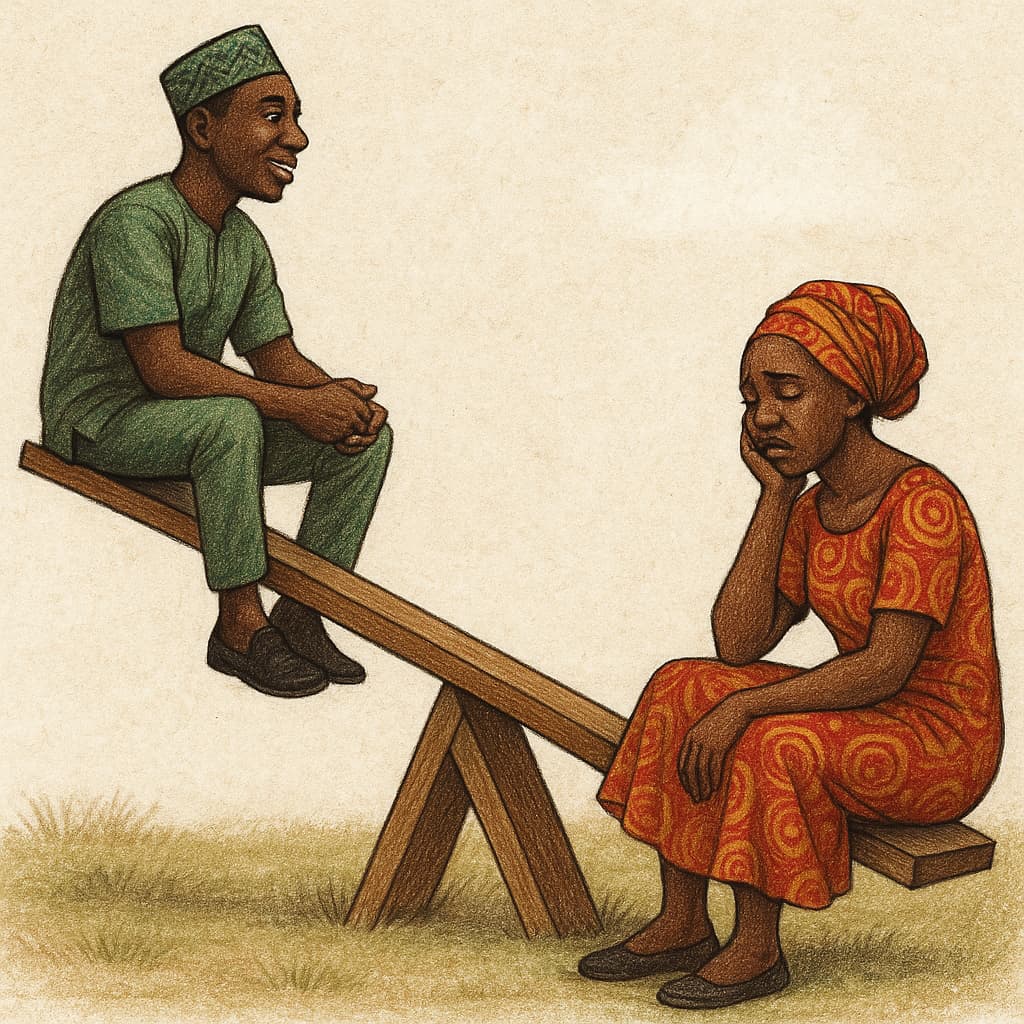
Playing the Fool: The Role We Don’t Admit, But Often Play
There’s a truth we don’t like to admit: Many relationships are not held together by love, loyalty, or even logic, but because someone chooses to play the fool.
You play the fool when you let things slide, put in more effort than the other person/party, or tolerate an imbalance just to keep the relationship going. Practically, we’ve all been there.
Take a deeper look at life and every form of relationship you’ve experienced or observed, they are never 100% balanced. The equilibrium always tilts to one side. Whether it's with friends, in marriage, among family, or with coworkers, relationships are never perfectly even. At some point, one person gives more while the other takes more. Sometimes the roles reverse, but there’s always a tilt.
Even our relationship with God is never 100% balanced, don’t you think? He gives grace, mercy, and love far more than we ever return.
It’s Not Always Fair, But It Happens
In every relationship, someone gives more at some point, and someone takes more. And that’s okay, as long as it evens out over time. But when one person keeps giving while the other keeps taking, that’s when someone’s playing the fool.
For example, back in May 2025, one of my best friends, Dr. Ireti called to check on me. Funny enough, I had been thinking about him too, but I never picked up the phone to call. It was our first call of the year, and yeah, 2025 has been crazy for me. I haven’t spent two weeks straight with my family, but that’s no excuse.
I should’ve reached out. Ireti didn’t get angry at why I’d been silent. We just clicked, like we’d talked yesterday. That call gave our relationship a boost, and it hit me later: he played the fool by making the effort I didn’t.
So many times, people go the extra mile, choosing to play the fool just to keep a relationship alive. Segun Akintayo is one of those people. He has reached out to me far more often than I’ve ever reached out to him.
Playing the Fool Keeps Things Going
This isn’t just about friends.
I know a lady in an abusive romantic relationship. She puts up with her partner’s hurtful behavior, and keeps tolerating the imbalance in the relationship. The only reason that relationship still exists is because she’s playing the fool, holding on despite the imbalance and unfairness. It’s hard to watch, especially since it’s someone close to me.
There’s a case of a woman working at a company, she contributes almost nothing productive, yet every month she gets paid. There’s clearly an imbalance in that employer-employee relationship. But the company continues to keep her on, because they’ve chosen to 'play the fool.'
On the flip side, I know plenty of people who are underpaid. They know they deserve more than what they’re getting, yet they stay in those roles. The company sees them show up every day, and that relationship continues to exist, not because it’s fair, but because someone is playing the fool.
I have these two close sisters, Joy and Rume. I fondly call them my besties in the Lord. At some point in our relationship this year, I went through a rough patch and completely ghosted them. I shut down and went silent. No calls, no replies, nothing. But these two? They didn’t give up on me. They kept reaching out with calls, messages, and checking up on me like clockwork. I gave them silence, but they gave me consistency.
They had every reason to let our relationship fade, every right to match my energy and move on. But they didn’t. They held space for me. They waited. They hoped. They played the fool
I could go on with numerous relatable examples, but you get the picture.
The Role That Holds the Relationship Until It Doesn’t
You play the fool when you act like everything’s fine, even when it’s not. It’s letting things slide that you wouldn’t normally accept, just to keep the peace or hold the relationship together overlooking disrespect, imbalance, or unfairness.
The moment the person playing the fool stops, the relationship often falls apart.
- The day you stand up to a partner who mistreats you,
- The day you stop calling first.
- The day your company finally says, “Hey, you’re not adding value, we can’t keep you,”
- The day you tell your employer you’re worth more,
that’s when the relationship starts to crack. Not because you’re wrong, but because the whole relationship is sustained on your silence, your effort, and your willingness to carry the other party’s shortcomings.
Why Do People Play the Fool
People play the fool for all sorts of reasons. Honestly, no relationship is perfectly balanced, so sometimes it’s just what you do to keep things going. But the real question is: for how long, and how much is too much?
From what I’ve seen, a lot of people play the fool because they get something out of it. Maybe it’s money, security, or some other benefit.
- Some stick with underpaid jobs because they’re scared they won’t find another one, especially in a country like Nigeria, where jobs are hard to come by and connections often matter more than qualifications.
- Others stay in unhealthy relationships because their partner pays the bills or gives them social status. For example, a woman may endure emotional abuse from a wealthy boyfriend because he sends her monthly upkeep, buys her wigs, or pays her rent. Or a man might tolerate constant disrespect from his partner just because she comes from a well-connected family that opens doors for him.
- Some people play the fool not out of ignorance or weakness, but with a plan in mind.
They’re enduring the imbalance because they’re expecting a benefit, a reward, an opportunity, or a breakthrough, sometime soon. In their mind, they have a timeline: “Let me just hold on until this promotion comes through,” or “Once I secure that connection or contract, I’ll stop tolerating this.”
They’re not necessarily blind to the imbalance; in fact, they’re very aware. But they’ve calculated the cost and made peace with temporary discomfort, because they believe the end justifies the means. It’s like someone in a toxic job who says, “Let me just gather enough savings before I resign,” or a person in a draining relationship thinking, “Let me just finish school first, then I’ll walk away.” In these cases, playing the fool becomes a strategy, a short-term sacrifice for what they believe is a long-term gain.
But the danger with this approach is that timelines can stretch. People can get used to the imbalance. What was meant to be temporary starts to feel normal. And before they know it, they’re still playing the fool, long after the expected benefit has either delayed or disappeared. So yes, some people play the fool with a time frame in mind. - Have you ever seen someone act like a “yes-man” or the popular boy-boy, taking disrespect just to stay close to someone powerful? Maybe it’s a PA to a politician who gets shouted at publicly but keeps showing up because of the cash, the trips, or the influence. That’s playing the fool for benefits. They might face ridicule, but they keep going because of what they gain.
- Some play the fool just to “belong.” A young person might hang around a toxic group of friends, constantly being mocked or used, simply because they don’t want to feel alone or left out. They swallow the insults just to be part of the crew.
- Then there are those who play the fool because they genuinely don’t know they deserve better. It's ignorance, plain and simple. A househelp who has never been treated with dignity may think being overworked and insulted is just part of life or a junior staff who has never been mentored may believe it’s normal to work overtime without pay, just to “prove loyalty.”
- And let’s not forget the spiritual angle. Some people stay under manipulative religious leaders, sowing seeds they can't afford, obeying blindly, enduring emotional and even physical abuse ,because they’ve been told, “Touch not my anointed.” Another way people play the fool: out of fear and misplaced faith
No wise person Plays the Fool Forever
People get tired. They hit their limit and decide they’re done, no matter what happens next. When someone stops playing the fool, the relationship often changes or ends.
I’ve seen it happen. A friend stops reaching out, and the friendship fades. An underpaid worker finally quits, and the employer-employee relationship scrambles. A person in a bad romantic relationship walks away, and the whole thing collapses.
It’s not always about being right or wrong. It’s just that the relationship was leaning on one person’s willingness to keep quiet and keep going.
Think About It
So many relationships survive, not because they’re strong or fair, but because someone’s playing the fool to keep them alive. That person might be you. We all play the fool sometimes. Or it might be someone you’re taking for granted.
Personally, I’ve lost count of how many relationships have quietly died simply because of imbalance and neither party was willing to play the fool (forever).
So pause for a second and think:
Who’s playing the fool in your life?
Who are you still connected to because they’re willing to let things slide?
And most importantly, how long can that last?
Because when the person playing the fool stops, the game is over. Maybe that’s when you’ll see what’s really worth holding onto and what needs to change.